


why choose us
Quality Control
Adhering to strict quality control standards, we utilize advanced testing equipment and processes to ensure products meet high-quality standards.
Rich Experience
Dedicated to strict quality control and attentive customer service, our experienced staff is always available to discuss your requirements and ensure complete customer satisfaction.
Customized services
We understand that each customer has unique manufacturing needs. That's why we offer customization options to cater to your specific requirements.
Expertise
Our team of experts has extensive knowledge and experience in the industry. We are well-equipped to provide expert advice and guidance to our clients.
We provide a comprehensive range of rubber vibration isolation mounts which are used for isolation in many industrial applications.
We also have the ability to produce a custom made vibration isolation mounts which suit your specific application specifications. Our in-house tooling facilities are ready to create custom assembled toolings for the vibration isolation mounts
We are able to manufacture custom made vibration isolation mounts from any rubber material. Some of them include:
Round vibration isolation mounts
Conical vibration isolation mounts
Square vibration isolation mounts.
Our vibration isolation mounts models are available with single or double studs, single or double female plugs, or a mix of both.
Standard vibration isolation mounts are manufactured in a 55 durometer hardness of natural rubber using cold rolled steel inserts. Using stainless steel, brass and other materials, custom attachment hardware can be made.
We can manufacture vibration isolation mounts of any commercial grades of natural rubber, EPDM, silicone, Neoprene, and nitrile.
-

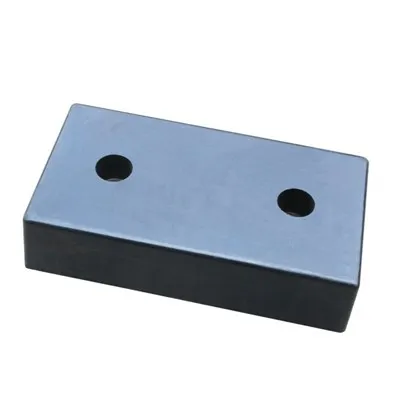
Rubber Dock Bumper is used to cushion and protect the wall of wharf logistics warehouse, and it is a truck reversing and unloading stopper.
Add to Inquiry -
Rounded Rubber Dome Bumpers Self-Adhesive Rubber Bumper Pads for Cabinet & Furniture Protection 10mm 16mm 18mm 19mm
Add to Inquiry -
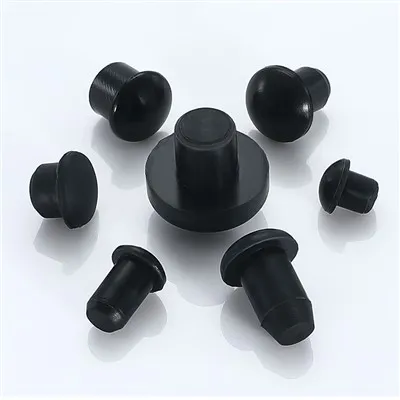
Abrasion-Resistant Polyurethane Rubber Threaded-Stud Bumpers Dome bumpers
Add to Inquiry -
Abrasion-Resistant Polyurethane Rubber Bumper
These unthreaded-hole bumpers made of polyurethane are excellent resistant to oil and wear.
Add to Inquiry -
Adhesive Rubber Feet for Electronics, Mechanical Equipment and Furniture Rubber Bumpers self Adhesive
Add to Inquiry -
-
Male-Male Cylindrical Anti-Vibration Mounts
Diameter of screws at both ends of rubber shock absorber is 5-150mm M3 M4 M5 M6 M8 M10 M12 M16.
Add to Inquiry -
Shear Compression Rubber Mounts
The shear compression rubber mount is designed to achieve high vibration damping in both shear and compression direction.
Add to Inquiry -
Reinforced Female Threaded-Hole Rubber Bumpers
With a metal core or base plate for added strength, these bumpers withstand repeated impacts for a longer service life than all-rubber bumpers. You can also use them as spacers, vibration dampers,
Add to Inquiry -
Reinforced Unthreaded-Hole Bumpers
With a metal washer or base plate for added strength, these bumpers absorb heavier impacts for a longer service life than all-rubber bumpers. Install them with your own screw.
Add to Inquiry -
Both bumper and plug, these protect equipment from impact while sealing off holes from dirt, dust, and water. They also grip surfaces, so they're often used as feet to keep instruments and bench-top
Add to Inquiry -
Reinforced Threaded-Stud Bumpers
With a metal core for added strength, these bumpers withstand repeated impacts for a longer service life than all-rubber bumpers. You can also use them as spacers, vibration dampers, and noise
Add to Inquiry



Anti-vibration mounts are fastened to machines, pipework and ductwork to eliminate vibration and noise. Vibrations from mechanical services and HVAC equipment can be transferred to the supporting structure and travel large distances to be emitted as noise elsewhere in a building.
Types of anti vibration mounts
Spring mounts
Antivibration spring mounts are primarily used for low frequency vibration damping (slow speed rotation around 600 RPM upwards). That could include applications like air handling units, cooling towers, chillers, air compressors, etc.
Rubber mounts
Rubber or elastomer mounts like our bell-shaped elastomer isolator are suitable for machinery with radial vibration (rather than axial), and equipment prone to starts and stops. They are ideal for equipment with high frequency vibrations above 2500RPM.
Spring hangers & rubber hangers
Spring hangers absorb vibration and vibration-related noise of low frequency suspended loads such as pipework, ductwork, fans and other HVAC equipment. Walraven's spring hangers include a rubber spring base cup to prevent contact between the housing and the spring, giving better efficiency.
Silent rubber absorbers
These versatile rubber isolators are for preventing metal-to-metal contact in machinery, generators and HVAC equipment, to prevent the transmission of vibration and noise. Available in a range of sizes and styles.
Silent blocks
Silent block rubber absorbers come in a range of configurations with either internal or external threads, or both. They are ideal for use with all kinds of elastic suspension or mounting of equipment, particularly if there is metal-to-metal contact. These are used for compression.
Rubber pads
Anti vibration rubber pads are an easy way to reduce noise and vibration from machinery. Walraven’s tile pad is supplied as 64 blocks joined by a membrane which can easily be cut to the required size and shape for added flexibility.
7 Things To Consider Before Selecting A Vibration Mount
How Will The Vibration Mount or Bumper Be Mounted?
These shock absorbing mounts are available with a single stud, two studs, a single tapped hole, two tapped holes, or a single stud and a single tapped hole, giving designers options in how they are mounted. If the component only needs to be mounted on one end, a rubber bumper is a better option and the designer must decide if the assembly is better supported by the tapped hole or threaded stud.
What Is The Expected Max Impact Load?
Unsurprisingly, vibration isolation mounts and rubber bumpers do not share identical damping or shock absorption properties. Dimensions and jacket material affect how these components perform under impact loads. Mounts with larger outer diameters can handle greater impacts but may not fit within the space constraints of the application. Likewise, mounts with greater lengths cannot absorb loads as high as shorter mounts with the same OD but they may be useful in creating a bigger buffer between moving parts and sensitive components. Conical style rubber bumpers resist greater impact loads using progressive resilience to absorb impact loads more gradually than the standard cylindrical bumpers. The difference is akin to slamming the brakes of a car versus braking gradually over a longer distance.
How Much Vibration Damping Is Needed?
The severity of vibration is dictated by the application itself. One of the most common uses for a shock absorption mount is as feet for industrial equipment such as conveyors. The amount of vibration and noise that these systems exert on a factory floor can be tremendous. In these cases, it is usually recommended that users select leveling feet designed for these applications. The amount of vibration a vibration mount can dampen is directly related to its jacket material. The lower the durometer of a vibration mount jacket, the more vibration dampening they offer, creating an inverse relationship between vibration dampening and impact load resistance. A taller vibration mount with more rubber can absorb more vibration but also has reduced impact load capabilities.
How Important Is Durometer?
Durometer measures the rigidity of vibration mounts and serves as their primary performance indicator, largely determining the component's spring rate and axial load capacity. The first step for a designer selecting one of these parts should be to decide the desired durometer. Spring rate refers to how much force is required to compress a rubber bumper. The greater the spring rate, the more rigid the component and vice versa. Axial load capacity refers to how much force a vibration mount can absorb and increases with durometer like spring rate.
What Is The Operating Environment?
Vibration mounts and rubber bumpers are offered in multiple jacket and core materials for more than just their differing performance characteristics. These components may be exposed to compounds such as oil, grease, chemical solvents, and acids or to environmental factors like extreme temperature and UV light. Selecting the right combination of materials ensures that vibration mounts will retain their performance and not fail prematurely.
What Temperatures Will The Application Reach?
Vibration mounts and rubber bumpers can retain their performance characteristics in hot and cold environments, depending on the jacket material selected and on the duration of the temperatures present. Natural rubber mounts can tolerate sustained temperatures up to 176° F (80° C) and short-term exposure up to 266° F (130° C). They can handle continuous exposure to temperatures as low as -40° F (-40° C) or short-term exposure to -76° F (-60° C) environments. NBR rubber cannot handle temperatures quite as low (-22° F/-30° C long-term and -40° F/-40° C short-term) but can tolerate higher temperatures of 248° F (120° C) long-term and 302° F (150° C) short-term. Silicone possesses the greatest temperature tolerance with operating temperatures from -76° F (-60° C) to 446° F (230° C). The effects of exceeded temperature ratings vary and the importance depends on the performance requirements of the application. If rubber jackets are subjected to temperatures or exposures times exceeding guidance they will become pliable and lose rigidity. Conversely, cold temperatures will cause the jackets to become more brittle and hard, which can cause cracking and flaking that may be permanent. Vibration mounts and rubber bumpers generally cannot be used in applications exposed to sunlight or that require regular UV disinfecting.
Is Cost A Factor?
Many of the beneficial properties of vibration mounts and rubber bumpers come with more expensive designs and materials. A stainless steel core with a silicone jacket, for example, offers superior chemical and wear resistance, however in many applications this is not needed. The difference in price does not amount to much in small quantities, but can quickly become apparent when ordering hundreds or thousands. In most applications, these components are only needed for light duty shock absorption in operating environments with limited exposure allowing for less expensive cylindrical styles with a natural rubber jacket and steel core to be used.
How to select anti Vibration Mounts
Equipment specifications
Different types of HVAC equipment will require different solutions. You need to consider the size and weight of the equipment or pipework and its structural attachment points. This will give you an idea of how many mounts you’ll need, and the size of those mounts.
Location of equipment
The location and support surface of the equipment can affect which types of isolator are required. For example, is it ceiling mounted, floor mounted on a slab in a basement, or is it outdoors on a building rooftop?
Vibration excitation of the equipment
The rotational frequency (revolutions per second) of the machinery contribute to the levels of vibration. The forces and couples generated will influence the isolators required to dampen the vibrations.
Type of building
Different types of building can have different requirements for vibration and acoustic isolation. For example an entertainment venue, industrial facility or luxury apartment block may have more significant requirements or expectations than some other buildings.
Environmental considerations
Whether the equipment is placed indoors or outdoors can make a big difference, but under all circumstances, you need to consider environmental factors such as the degree of corrosivity and the minimum and maximum ambient temperature near the equipment.
Special requirements
Last but not least, you need to check if there are any special requirements. For example, are there electrical, pipework or ducting connections that might modify the mechanical response of the mounting system. Are there any externally applied forces or moments; minimum or maximum clearance requirements between equipment and foundation; alignment requirements; or dynamic loads.
Applications of Anti Vibration Mounts
Industrial Machinery:
In the industrial sector, heavy machinery and equipment generate significant vibrations during operation. These vibrations can cause reduced accuracy and possible damage to surrounding structures. Anti-vibration mountings are used to isolate industrial machinery such as compressors, pumps, motors and production equipment. By reducing vibration, these mountings contribute to smoother operations, improved product quality and longer equipment life.
Automotive Industry:
Vibration control is critical in the automotive sector to ensure vehicle comfort, stability and longevity. Anti-vibration mountings are integrated into the vehicle suspension system to absorb road vibrations and shocks. They help reduce vibrations transmitted to the chassis and passenger compartment, creating a smoother and more comfortable ride for occupants.
Aerospace and Defence:
In the aerospace and defense industries, accuracy and reliability are paramount. Anti-vibration mountings play an important role in isolating sensitive equipment from vibrations, especially in aircraft, satellites and military vehicles. These mountings protect delicate electronics, optics and sensors, ensuring accurate readings and smooth operations.
Power generation:
Power plants, including nuclear, thermal and hydroelectric facilities, rely on heavy rotating equipment such as turbines and generators. Vibrations in such machines can cause mechanical failure and affect the overall power generation efficiency. Anti-vibration mountings are used to isolate these critical components and reduce vibration, protecting the structural integrity of the power plant and ensuring stable and efficient power generation.
HVAC System:
Heating, ventilation, and air conditioning (HVAC) systems often contain various fans, blowers, and motors that generate vibrations during operation. These vibrations can cause noise and discomfort in buildings. Anti-vibration mountings are used in HVAC systems to reduce vibration and noise levels, creating a more pleasant and quiet indoor environment.
Medical Devices:
In the medical industry, accuracy is critical during the diagnosis and treatment process. Delicate medical equipment, such as MRI machines, X-ray machines and laboratory equipment, can be sensitive to vibrations. To ensure accurate readings and reliable medical data, anti-vibration mountings are used to isolate these devices.
Electronics and Semiconductor Manufacturing:
In electronics manufacturing and semiconductor cleanrooms, where precision is essential, anti-vibration mountings play an important role. These mountings isolate sensitive equipment, such as wafer fabrication tools and inspection equipment, from vibrations that can disrupt the manufacturing process and affect product quality.
Marine and Offshore Applications:
On ships and offshore platforms, heavy machinery and equipment are exposed to harsh conditions and significant vibrations. Anti-vibration mountings are used to reduce vibration from engines, pumps and other mechanical systems. They prevent the transmission of vibrations to the ship's hull and superstructure, create a safe and stable environment for crew members, and protect equipment from excessive stress.
Research Laboratory:
In research and development laboratories, where precise measurements and experiments are performed, vibration can adversely affect the results. Anti-vibration mounting is used to isolate sensitive equipment and test setups from external vibrations, providing a controlled and stable environment for accurate research and analysis.
Our Factory
This characteristic of global collaboration highlights our strong presence in different markets and reflects our flexible and adaptive business model. Through partnerships with clients worldwide, we continuously expand our international business network, dedicated to delivering excellent products and services that meet the diverse needs of customers globally.

FAQ
Find professional vibration mounts manufacturers and suppliers in China here. Please feel free to wholesale high quality vibration mounts made in China here from our factory. For custom service, contact us now.
Anti Vibration Mounts, rubber vibration mounts, Anti Vibration Pads for Air Compressor